SNOW / BUYING DECISIONS
Snowmobile Studs vs. Carbides: Plan the Whole Traction Setup
Research, with manufacturer sources linked below. How the guides are written →
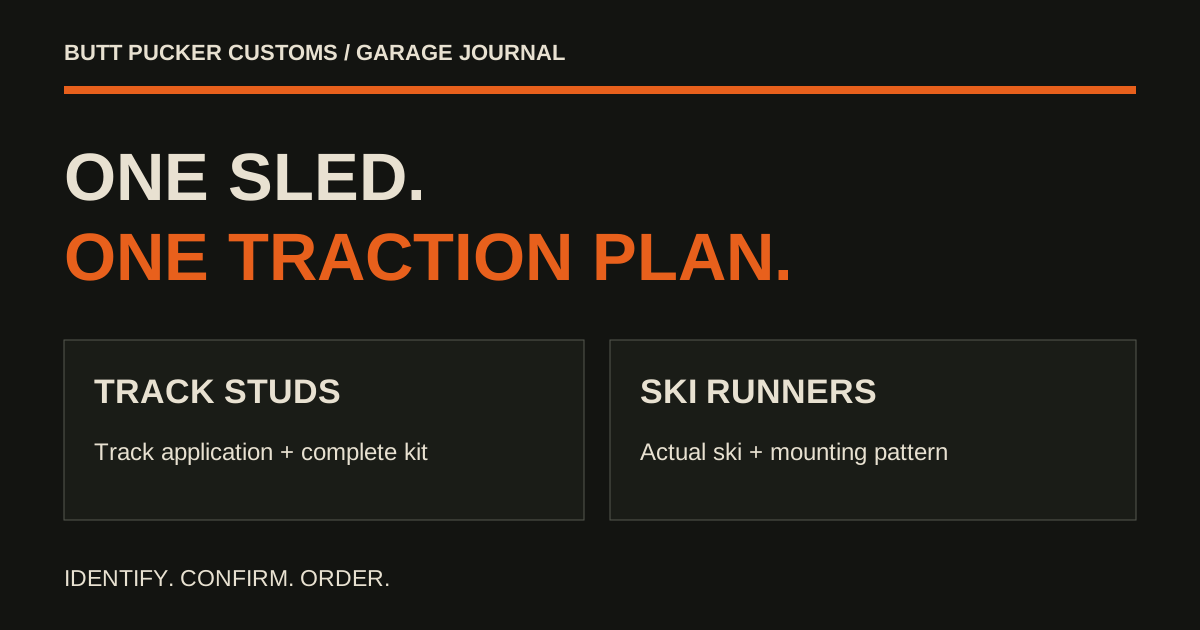
Studs and carbides work at different ends of the sled. Choosing one without considering the other can turn a simple shopping trip into a second round of parts.
Track studs add traction at the track. Carbide runners are wear and steering components beneath the skis. They are complementary parts of a setup, rather than interchangeable upgrades. Establish the actual ski, track and current condition before choosing either.
Two different jobs. One sled.
| Component | Where it works | What your order must identify |
|---|---|---|
| Track studs | At the track, adding bite in suitable conditions | Approved track application, stud system, length, quantity, layout and protection |
| Carbide runners | Under the skis, providing a steering edge and a replaceable wear component | Actual ski, runner series, mounting pattern, cutting-carbide specification and quantity supplied |
Woody’s separates studs and runners into distinct product families and provides selection tools for both. Snow Studs explicitly includes existing stud quantity and type in its runner-selection advice. The useful shopping question is therefore “What combination suits this sled?” rather than “Which one is better?” [1–3]
Before ordering: separate wear, fitment and setup
Write down what you know, what you observed and what still needs checking. “I want more control” is a goal. “The current runner is worn, the skis were changed by the previous owner, and I do not know the stud count” is a starting point someone can work with.
Have the existing components inspected against their service instructions before selecting an upgrade. If something is damaged, loose or incorrectly fitted, adding a more aggressive part is not a substitute for resolving it. A handling complaint is also not enough information to diagnose a runner choice remotely. Give the dealer or qualified technician the conditions, current parts and service history.
- Identify the machine: model year, model and relevant configuration.
- Identify what is actually fitted: ski brand/model and track identification. Photograph markings and existing part numbers.
- Describe the riding: typical terrain and conditions, rider/load and the result you want.
- Record the existing setup: current runners and studs, known service work and anything changed from stock.
Carbide runners: the ski matters more than the badge on the hood
A sled may no longer have its original skis. Woody’s runner guidance begins with the ski’s bolt pattern and matching runner series. That is why a listing that says it fits your sled’s model year still needs checking against the skis underneath it. [2]
For the order, record the ski identification, the confirmed runner series and the exact part number. Ask the supplier to distinguish the overall runner dimensions from the cutting-carbide specification. Check whether the price covers a single runner or a pair, and what hardware is included.
Do not choose by one number in isolation. Snow Studs asks buyers to consider terrain, experience, riding style and the stud setup. Ask for the reasoning behind the proposed combination, then keep that recommendation with the part numbers. [3]
Secondhand sled? Start underneath.
A photo of the actual ski and its identification is more useful to a parts supplier than an assumption that everything is still factory fitted.
Track studs: price the complete installation
Stud selection is more than choosing a box quantity. Woody’s offers a stud-selection guide and a separate traction guide; Snow Studs discusses rider/sled weight, pattern, backing hardware and protection in its application guidance. Use the manufacturer’s recommendation for the actual application rather than borrowing a number from somebody else’s sled. [1,4]
Build an itemized proposal: studs, the specified nuts and support plates, the correct layout/template, required protection, tools or installation labor, and the manufacturer’s follow-up instructions. Ask the installer to verify the application and clearances before any drilling. This guide deliberately does not give a universal stud length, hole layout or torque figure.
Compare complete quotes, not just the price per stud. One kit may include backing hardware while another listing is for studs alone. A cheaper box can be a more expensive completed job if you discover the missing pieces after the sled is already apart.
Should you change runners at the same time?
Plan the combination together; that does not automatically mean replacing serviceable parts. Give the supplier your current runner specification and proposed stud setup. Ask whether the existing runners remain appropriate and why. Woody’s demonstration library also discusses balancing stud traction with ski-runner carbide. [5]
The worksheet to complete before checkout
Copy these six lines into your phone before you call a supplier. If a field is blank, that blank is your question, not a guess for the cart.
A useful supplier question
“Here is my actual ski and track identification, current setup and typical use. Which runner and stud combination do you support for it, what else is needed to install it, and which instructions should I keep?” That is a much stronger question than “Will these fit a snowmobile?”
Find the right parts after confirming the application
These are category searches, not selected fitment matches or a hands-on product ranking. Use the exact confirmed part number when shopping, compare the package contents, and check the seller’s current details.
Still building the whole shopping list? Our snowmobile accessories guide covers oil, fuel additives and storage. Start with the preseason checklist if the sled has not yet been inspected.
Manufacturer references
Sources reviewed October 24, 2026. Keep the supplier's application recommendation with your part numbers.